Septic Repair
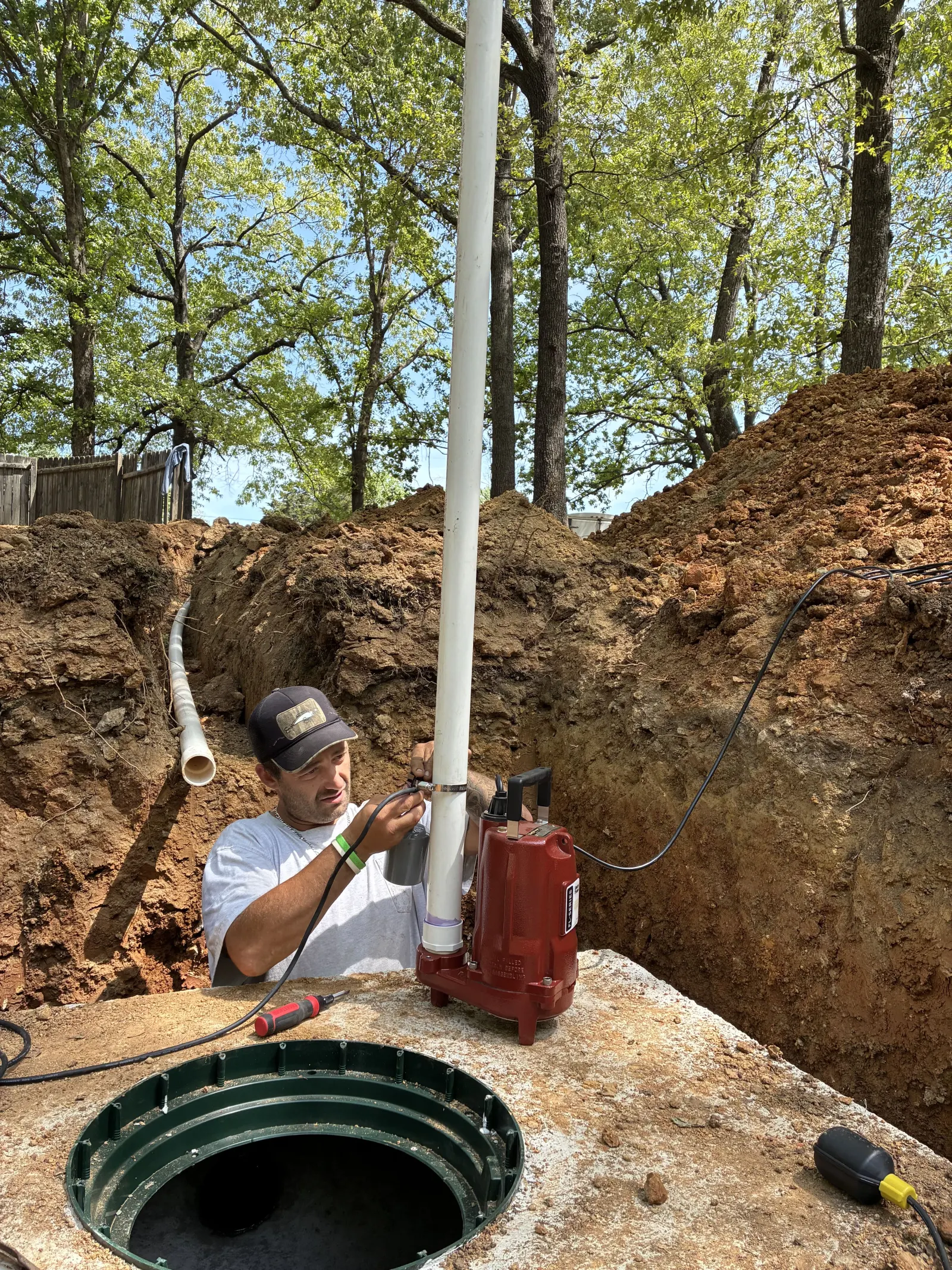
We repair what fails on an existing septic system: pumps, floats, alarms, baffles, lids and broken lines. Our crew finds the failed part first, then fixes it and puts the ground back.
Learn More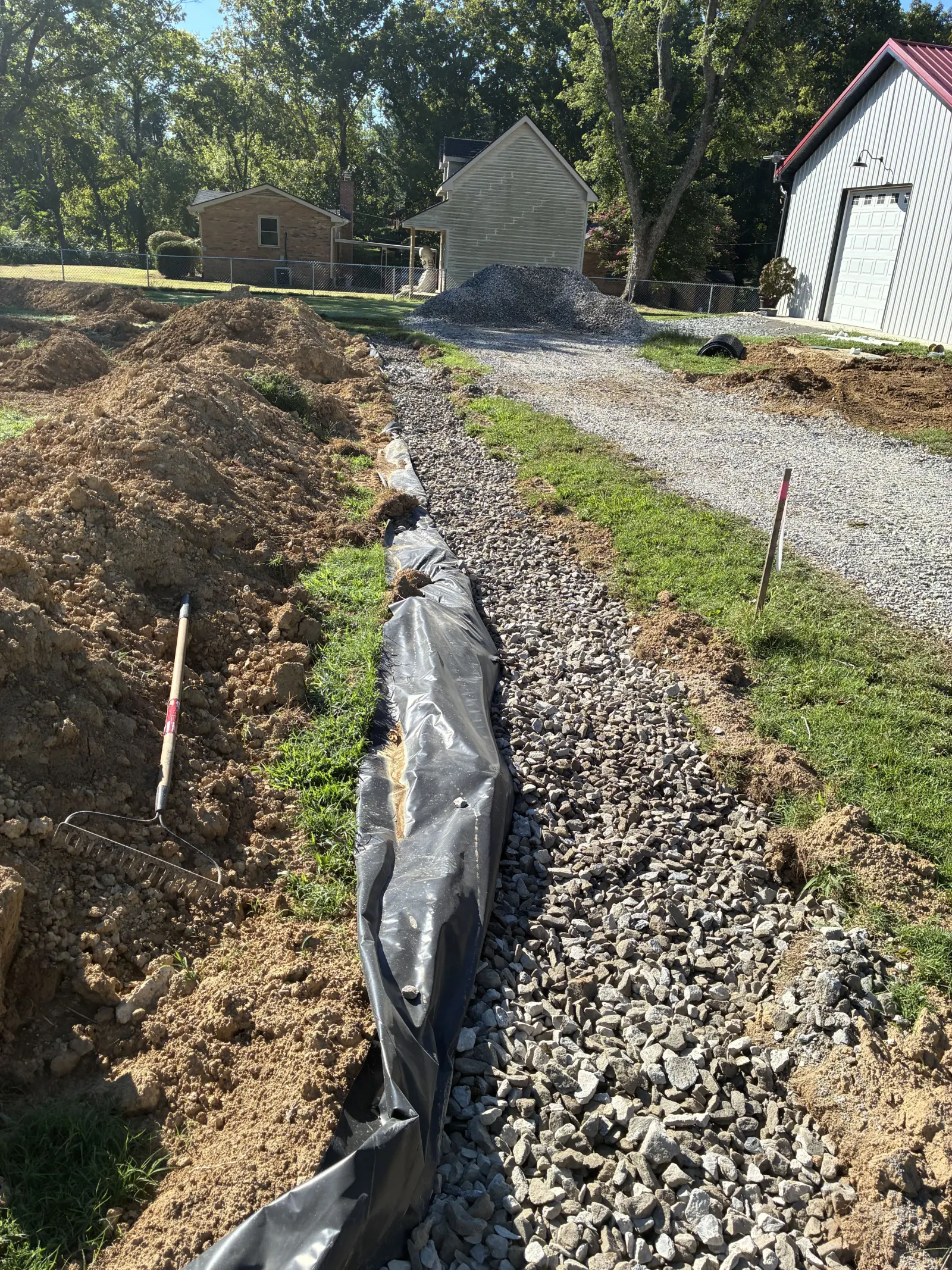
Drain field repair is what you need when the field stops taking water. Wet spots and spongy ground show up over the trenches. Drains get slow and toilets gurgle. A sewage smell can hang over the yard, and grass above the field stays bright green in dry weather.
We are a septic and sewer contractor based in Greenbrier, in Robertson County. Our crew rebuilds drain fields across the north side of the Nashville area. Telling a field problem from a tank problem comes first, because sometimes the fix is a pump or baffle repair. Estimates are free, and you can call or text (629) 285-6381.
Tell us what the septic or sewer is doing. We will get right back to you.
A drain field takes the water leaving your septic tank and lets it soak into the soil. The EPA describes it as a shallow, covered excavation in unsaturated soil. When the ground under the trenches stays wet, that water has nowhere to go. It backs up into the house or surfaces in the yard.
Soils on the Highland Rim north of Nashville work against drain fields. Many carry a fragipan, a dense layer that sits about 18 to 36 inches down. USDA soil records for the Dickson and Sango series call water movement through that layer slow to very slow. Water sits on top of it instead of soaking away.
Shallow limestone and heavy clay add to it, and wet winters and springs keep fields saturated for weeks. Too much water is the other half of the problem. The EPA tells homeowners to keep roof drains and sump pumps away from the field. Solids that escape a tank that misses its regular pumping will plug the trenches for good.
The two look alike from the yard, so we start by opening the tank. A tank full past the outlet pipe often points at the field. A tank that fills again a week after pumping usually means the field will not take water.
Other times the tank side is the whole story. A stuck float or a dead pump can flood a yard the same way. Those are fixes on the tank, and the field is fine once the tank works again.
We probe the trenches to see how wet the field really is and where the water stops. On a house that is being bought or sold, this usually comes up during a septic inspection. Knowing which side has failed decides whether you are looking at a small repair or a new field.
Some fields come back with a repair. A crushed line or a failed distribution box can be dug up and replaced, and the field keeps working. When the soil under the trenches has sealed off, a new field is the only real fix. We bring 20 years of septic and sewer experience to that call, and we are licensed, insured and bonded.
The Tennessee Department of Environment and Conservation issues the construction permit through its Division of Water Resources. That permit covers repair to an existing faulty system. A soil site evaluation sets where a new field can go and how big it needs to be.
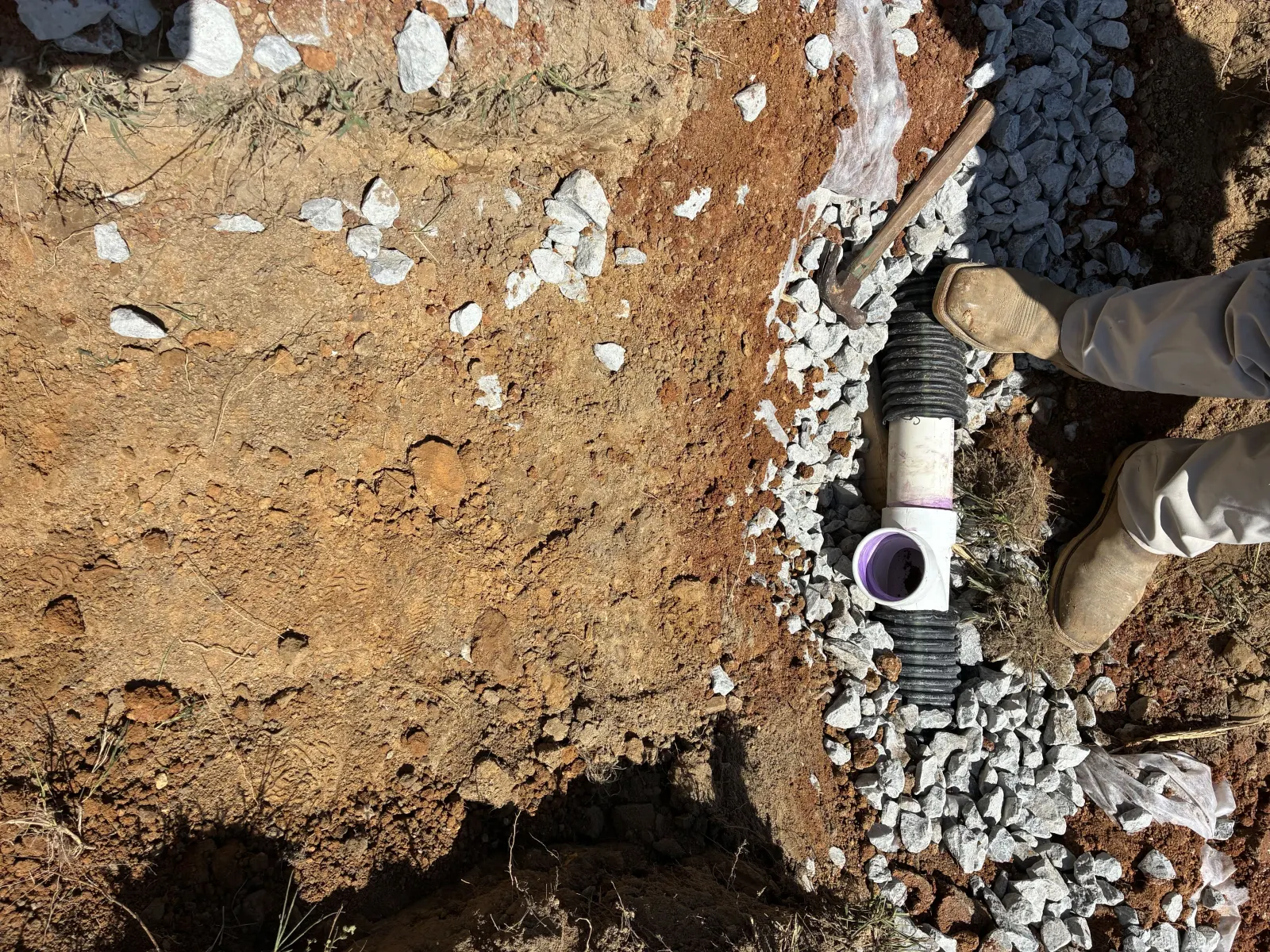
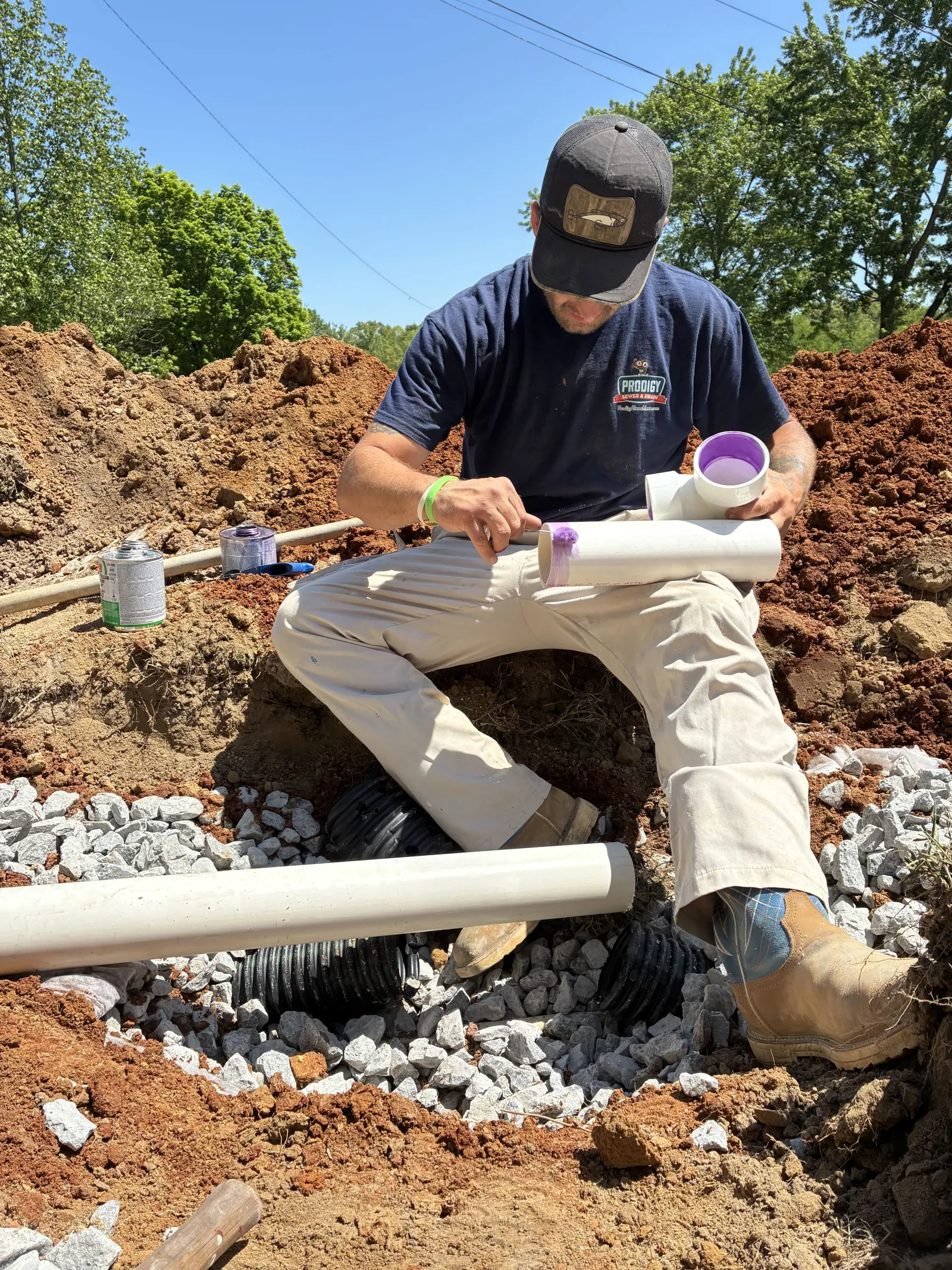
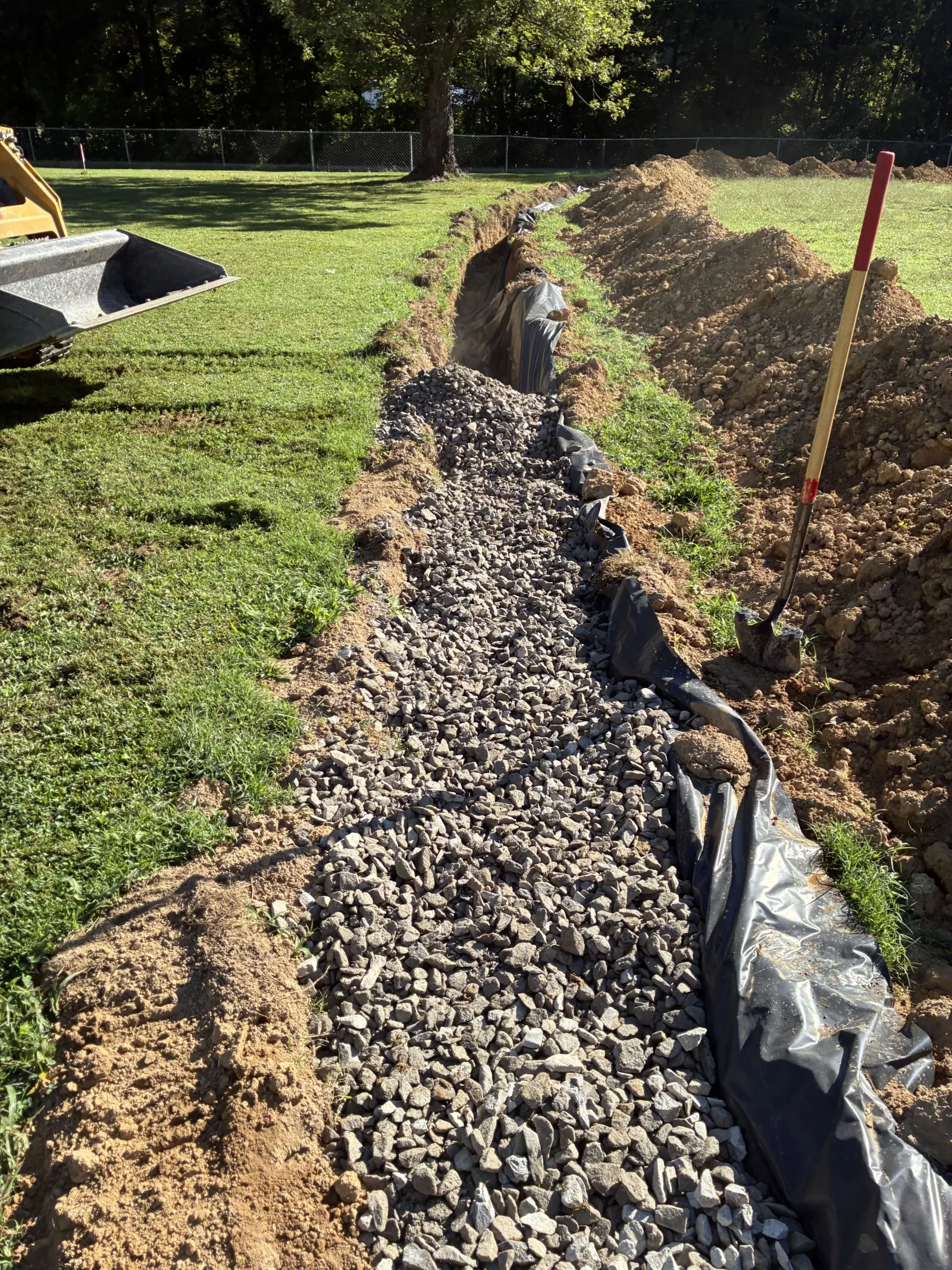
Our crew lays out the new trenches, digs them to grade and sets the stone. Perforated pipe goes in the stone, then a fabric cover goes over the top. That cover keeps dirt out of the clean rock so the trench stays open. On a full rebuild, the new field ties into a new septic tank set at the same time.
Free, no-obligation estimates across the north side of the Nashville area.
(629) 285-6381From the first call or text to the finished property, here is how it goes.
Reach us at (629) 285-6381 and describe what the system is doing. Photos help, and you can text them to the same number.
We come out, open the lids and check the tank, the pump and the field. On a drain problem we check the lines instead.
We tell you what is wrong, what the fix involves and what it costs. The estimate is free, and you decide on your own timeline.
Our own machines dig the trench, set the tank and pull the old line. We backfill, grade the ground back and clean up the site.
Before we leave we show you what changed and where the lids and cleanouts sit. You get a plain description of what to watch from here.
Common questions about drain fields across the north side of the Nashville area. If yours is not here, call or text and ask.
We repair what fails on an existing septic system: pumps, floats, alarms, baffles, lids and broken lines. Our crew finds the failed part first, then fixes it and puts the ground back.
Learn More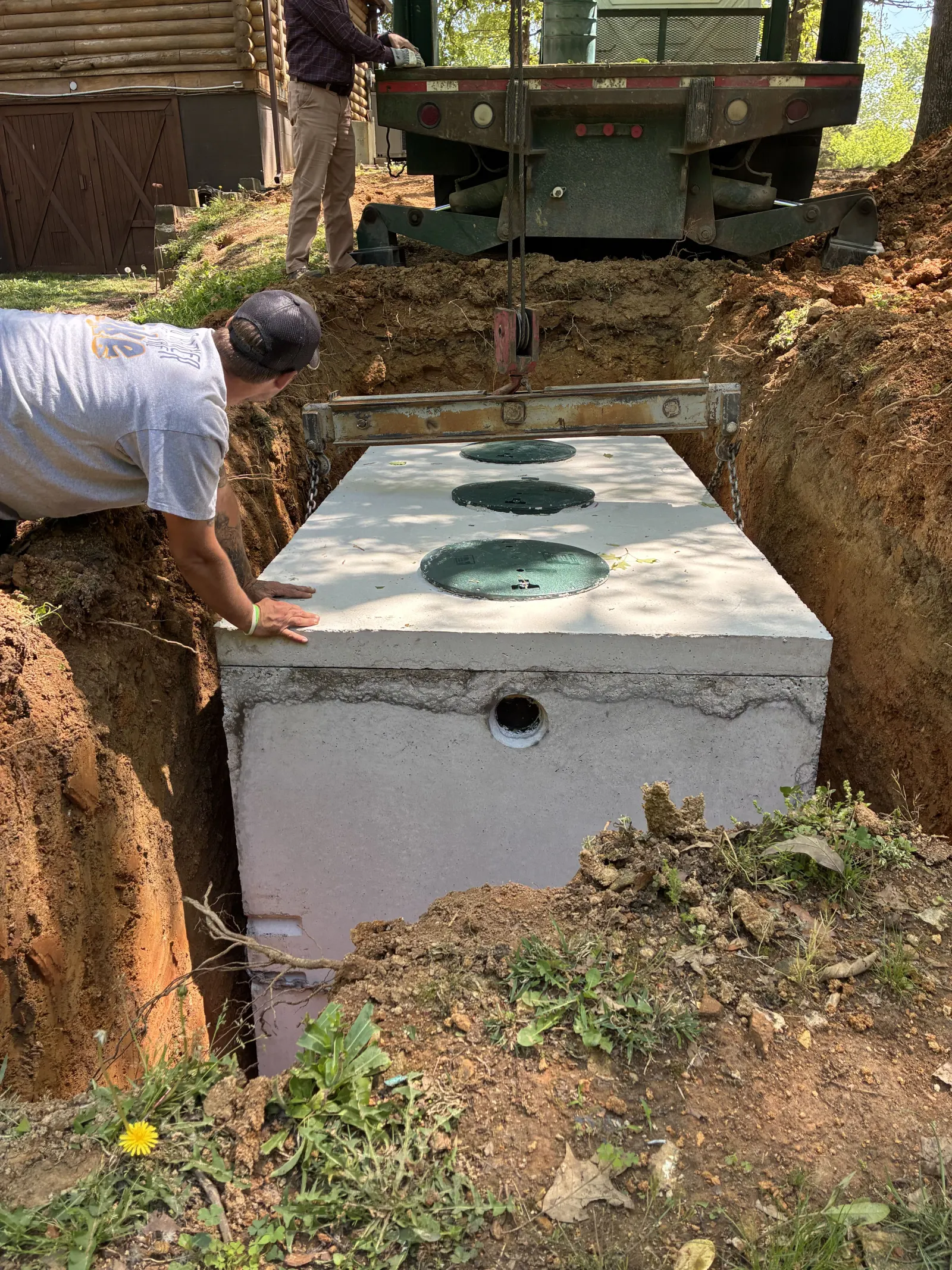
New septic systems for new builds and replacement tanks when an old one gives out. We dig with our own equipment, set the precast concrete tank, plumb it, and tie it into the drain field.
Learn More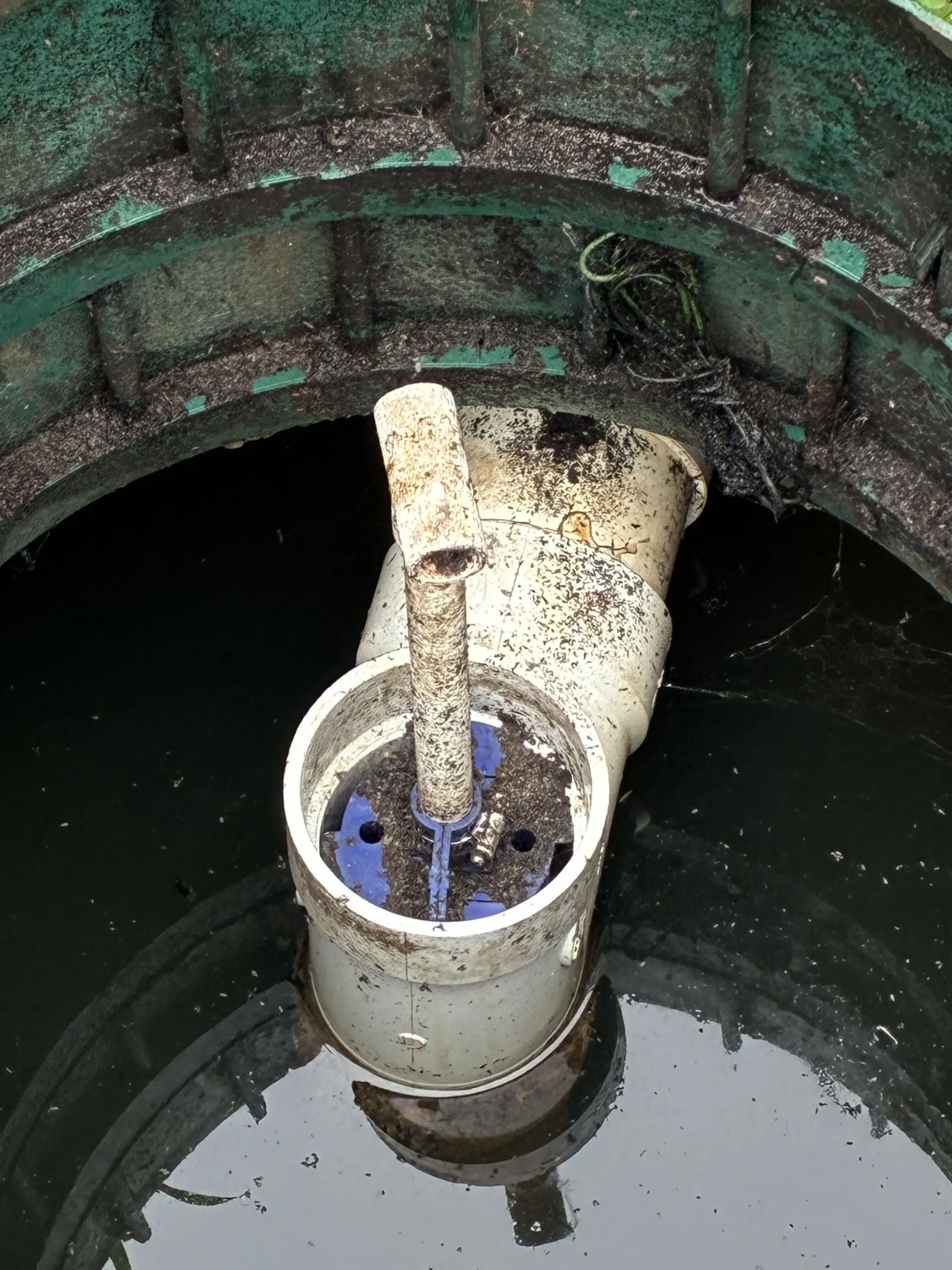
We inspect septic systems for home buyers, sellers and owners due for a checkup. You get a written report on the tank, the pump and the drain field.
Learn MoreTanks, drain fields, pumps and sewer lines are what our crew works on every week. That work is the whole business.
We are licensed, insured and bonded. You can ask for that paperwork before we start, and we will send it.
We set new tanks and rebuild drain fields. We also clear clogged drains and replace sewer lines, so one call covers both.
We work out of Greenbrier and cover Robertson, Sumner, Cheatham, Davidson and Montgomery counties. Estimates in that area are free.
Wet ground, yard odors, slow drains, and bright green grass over the trenches. What each sign means for a Middle Tennessee drain field. Call or text.
Read more →What a new septic system costs in Tennessee, from published market ranges to the state permit fee, plus what soil, size and site access change.
Read more →Send the details here and we will get back to you. You can also call or text (629) 285-6381, and estimates are free.
Tell us what the septic or sewer is doing. We will get right back to you.